Your SDK Is the Curriculum: Teaching Claude Code Your Platform
Most organizations think about SDKs purely as developer infrastructure, but there's a broader opportunity being missed.
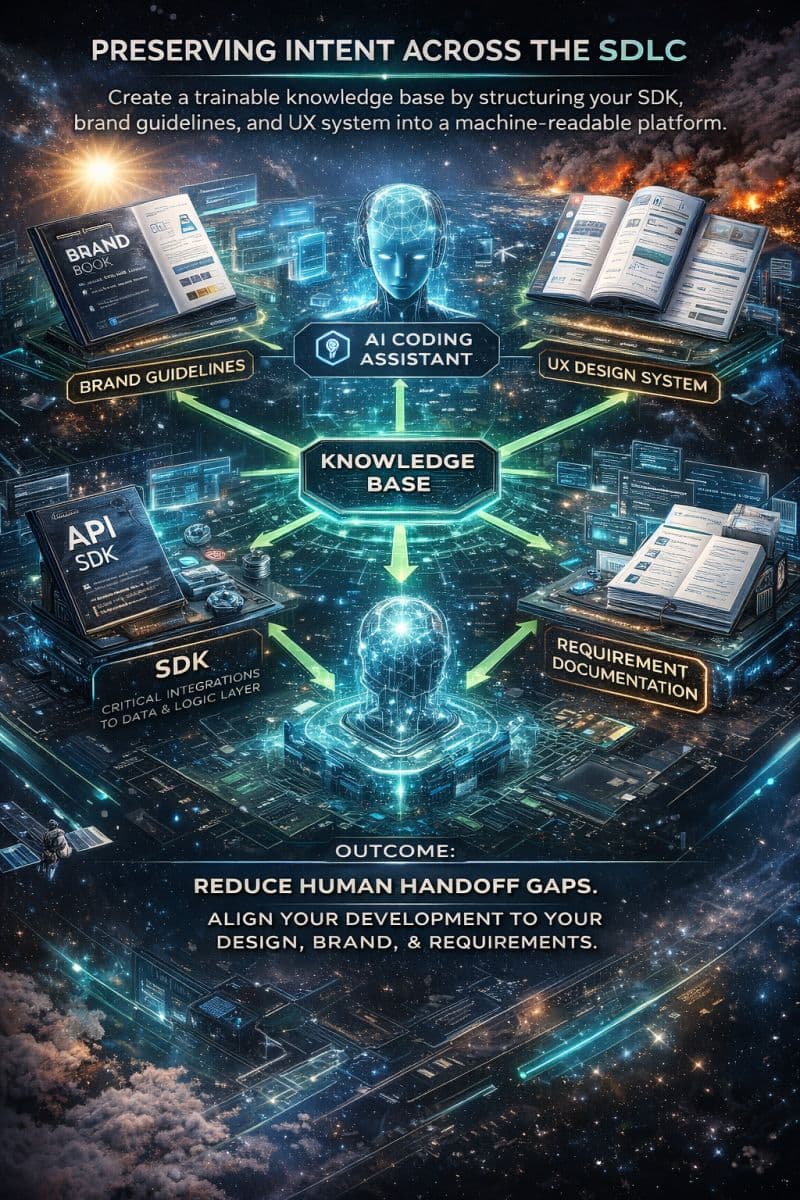
When you pair an SDK with well-structured brand guidelines and UX design systems, you create something more powerful than documentation — you create a trainable knowledge base.
Tools like Claude Code can be given that context, which means every component an engineer builds starts from a foundation that already understands your platform's voice, your design language, your component patterns, and your integration contracts. That's not just faster development. That's consistent development at scale.
The SDLC reimagination angle
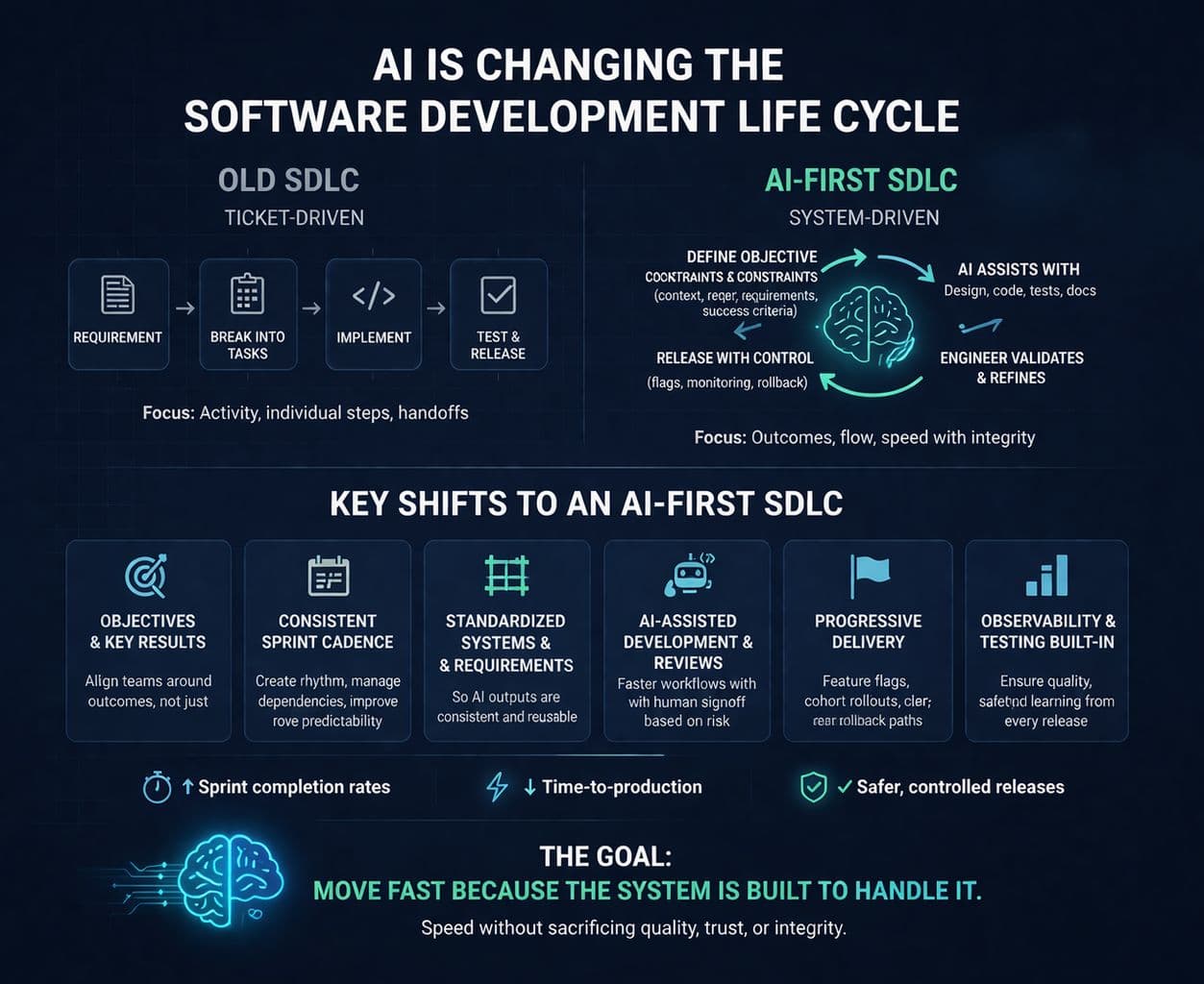
The traditional software development lifecycle was designed around human handoffs — design to dev, dev to QA, QA to release. Each handoff is a compression of context. What gets lost in translation between a brand guide and a pull request is often enormous.
When your SDK, your UX system, and your brand guidelines are structured as machine-readable knowledge that an AI coding assistant can actually reason about, you start collapsing those handoffs. The gap between "what we intended to build" and "what got built" shrinks dramatically.
That's the real reimagination of the SDLC — not just writing code faster, but preserving intent across the entire development chain.
How this ties back to the "build and forget" critique
Tools that generate code without that embedded context are building into a void. They produce something that works technically but has no awareness of where it sits in the larger product ecosystem.
Feeding Claude Code your SDK, your design system, and your brand guidelines transforms it from a code generator into something closer to a junior engineer who actually read the onboarding docs — one who builds things that look right, integrate correctly, and don't have to be refactored the moment they touch the rest of the platform.
Curriculum, not documentation
Think of your SDK, brand guide, and UX system as the curriculum. Claude Code is the student that never forgets what it learned.
The organizations that invest in making that curriculum machine-readable are the ones that will see compounding returns on every hour their engineers spend with AI-assisted development tools.
The companies still treating their design system as a Figma library and their brand book as a PDF will keep paying the handoff tax forever.
Share this post